

Growing Your Business in Canada
Canada offers opportunities to start, buy, or invest in a business. Your options depend on your business model, location, experience, finances, and immigration status.
After establishing a business, you may need to register it, obtain a Business Number and tax accounts, secure licences and permits, arrange financing, and meet federal and provincial or territorial requirements. Foreign nationals must also consider the immigration status and work authorization required to operate a business.
Launching a business in Canada
The key to running a successful Canadian business is good planning. Before signing up, study the market, learn who your market is, find out what your competitors are doing, and build a business plan and reasonable financial forecast.
The common procedure consists of:
- Keeping an eye on odds and ends in terms of developing and validating your business idea and your market opportunity.
- Selecting the province or territory that the business will transact with
- Determining one of the most appropriate structures (a sole proprietorship, a partnership or a corporation)
- Selecting and registering a business name (if required),
- Using the term ‘federally or provincially/territorially’ (if applicable)
- Business Number, appropriate CRA program accounts are to be obtained. Obtaining of Business Number and registering for relevant CRA program accounts
- Checking federal, provincial/territorial and municipal licences and permits
- Installing accounting, banking and insurance facilities, payroll and record-keeping system
- Insuring against risks associated with tax, employment, and other regulatory obligations in a timely manner; before leaving the fold, during operations.
These will vary and are dependent on the kind of business, and the services it provides at the site. Canada’s official business-starting guidance allows you to break the process down into various phases: planning, business-name selection, registration, permits and licences, financing and business support.
Registering a Business in Canada

A business could require government business registration on various levels. Depending on whether you are a sole proprietor, a partnership, or incorporated under a federal act or a provincial or territorial act, you will follow the appropriate process.
The Canadian Business Number (BN) is a unique number assigned by the Canada Revenue Agency (CRA). In addition, you may need accounts for GST/HST, payroll deductions, corporation income tax, and other federal programs, depending upon your activities. The CRA is now making the majority of Business Registration Online accessible using a CRA account or supported provincial partner, starting July 14, 2026.
Other important resources to consult for permit(s) or licence(s) include BizPaL and local (provincial, territorial and municipal) governing bodies, as the permit or licence requirements may differ by industry, location and type of business.
Business Taxes in Canada

A business could require government business registration on various levels. Depending on whether you are a sole proprietor, a partnership, or incorporated under a federal act or a provincial or territorial act, you will follow the appropriate process.
The Canadian Business Number (BN) is a unique number assigned by the Canada Revenue Agency (CRA). In addition, you may need accounts for GST/HST, payroll deductions, corporation income tax, and other federal programs, depending upon your activities. The CRA is now making the majority of Business Registration Online accessible using a CRA account or supported provincial partner, starting July 14, 2026.
Other important resources to consult for permit(s) or licence(s) include BizPaL and local (provincial, territorial and municipal) governing bodies, as the permit or licence requirements may differ by industry, location and type of business.
Investors

There is no current federal investor immigration program in Canada – the federal Immigrant Investor Stream (IIS) was phased out several years ago, and the federal passive-investment stream never existed.
The Quebec Immigrant Investor Program (QIIP) remains one of the only investor channels that are still available in the province, and it is one of the few passive investment immigration programs in the country – that is, investors do not need to run a business on a day-by-day basis. QIIP was reopened after an extended hiatus with new and more stringent thresholds. The applicant is expected to demonstrate, and/or provide evidence of:
Having a legally obtained net worth of at least CAD 2,000,000 (yards daily or with spouse)
Qualifying experience as a manager or owner for at least 2 years in the 5 years prior to application
- An investment via an investment fund / financial intermediary for up to five years under a government guarantee of approximately CAD 1,000,000
- There will be a non-refundable contribution when the investment is financed and not paid all at once, which is approximately CAD 200,000.
- A desire to stay or live in Quebec
One advantage of this is that intermediate to advanced French proficiency is generally looked at favourably and is given preference and may not fall under the annual quota. Live thresholds are periodically updated and change with QIIP terms – double-check these in advance of advising a client to invest.
Entrepreneurs
A business could require government business registration on various levels. Depending on whether you are a sole proprietor, a partnership, or incorporated under a federal act or a provincial or territorial act, you will follow the appropriate process.
The Canadian Business Number (BN) is a unique number assigned by the Canada Revenue Agency (CRA). In addition, you may need accounts for GST/HST, payroll deductions, corporation income tax, and other federal programs, depending upon your activities. The CRA is now making the majority of Business Registration Online accessible using a CRA account or supported provincial partner, starting July 14, 2026.
Other important resources to consult for permit(s) or licence(s) include BizPaL and local (provincial, territorial and municipal) governing bodies, as the permit or licence requirements may differ by industry, location and type of business.

The Quebec Entrepreneur Program is one of the most involved entrepreneur programs in Canada, as the federal path has been turned off. There are 2 streams of profit in it;
- Stream 1 – Business Project: for those who plan to start a new business in Quebec; must obtain a service offer from a recognized Quebec business accelerator, incubator and/or university entrepreneurship centre.
- Stream 2 – Capital and Management Experience: Buying or Operating existing Business in Quebec: Applicants will need to have capital and management experience and plan to purchase or operate an existing business in the province of Quebec.
French is no longer a requirement for application, but for candidates with an intermediate to advanced knowledge of French, the processing is outside the normal turnaround times and therefore is advantageous for candidates who could benefit from it. This program is opened periodically with different intake amounts and deposit amounts which are subject to change at the minister’s discretion; therefore, applicants should review the current ministerial orders for this program before making an application.
Entrepreneurs
Self-Employed Person Program is for people from outside the country with relevant experience in cultural activities or athletics who plan to become self-employed in Canada and contribute to Canadian cultural or athletic life.
The program was suspended as of April 30, 2024, and IRCC has indefinitely prolonged the suspension with the Start-Up Visa closure. Long processing and selection issues have led to an IRCC review that found the program is “no longer fit for purpose” and the department is working on an option for a new pathway – this could expand to include industries like self-employed doctors, lawyers, academics and digital creators. This is not finalized or officially announced; website content should not indicate that this program is an available pathway to a new program of application; this section should be updated when IRCC shares more information about its pathway.
The Quebec Self-Employed Worker Program is for eligible self-employed workers who intend to establish themselves and practise their trade or profession in Quebec. You must meet the program’s requirements, including applicable work experience, settlement funds, and other eligibility conditions. The work experience, settlement capital and intention to establish a business in the province is typical of the areas that applicants must have in order to apply. Intake conditions and needs for funding are also periodically reviewed as is the case with Quebec’s other business streams.
Business Visitors
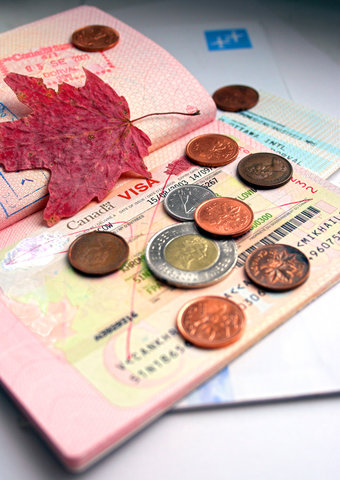
The idea of a business visitor is not associated with entering the Canadian job market with the purpose of taking a job. As a business visitor, you can come to Canada temporarily for eligible business activities without entering the Canadian labour market. You should generally plan to stay for less than 6 months, maintain your main place of business and source of income and profits outside Canada, and avoid taking up employment in Canada. Examples of activities that qualify for the business-visitor category include attending a meeting, conference, convention or trade fair, concluding a contract, making a purchase of goods or services in Canada for a foreign business, visiting a location to complete certain after-sale services, training and/or education related to a foreign-sourced product or service, and negotiations for a contract.
Business visitors need not obtain a work permit as long as the work source is basically outside Canada, the business does not compete with Canadian businesses, and the main source of business benefits remain outside Canada.
If you intend to work for a Canadian employer, earn for a Canadian source or stay for longer than six months, you will be assessed according to the definition for a temporary worker, and will likely need to obtain a work permit.